
Manga Glossary
Manga Glossary
Last updated: January 2026
This glossary defines the essential vocabulary of manga, manhua, and manhwa. Terms are listed alphabetically, with the language of origin in italics where it adds clarity. Where the term has a contested or evolving meaning, we note the disagreement. For a more contextual introduction to the three traditions, see our Reader’s Guide.
A
Aizōban — (Japanese) A premium edition of a manga, larger format, on better paper, sometimes with cleaned-up artwork or extras. Reissued for landmark or commercially successful series.
Anime — (Japanese) Animated work originating in Japan. While the English-language usage is sometimes restricted to Japanese animation, the original Japanese term simply means “animation” of any origin.
B
Bishōjo — (Japanese) “Beautiful young girl”; refers to a stylistic or genre tendency featuring conventionally attractive female characters.
Bishōnen — (Japanese) “Beautiful young man”; the male equivalent, often associated with shōjo and BL works.
BL (Boys’ Love) — A genre depicting male-male romantic relationships, primarily produced for a female readership. Originated in Japanese shōjo manga; now a transnational genre with significant manhwa and manhua presence.
Bunkoban — (Japanese) A pocket-sized reprint of an older manga series. Smaller than tankōbon, cheaper, with reduced artwork.
C
Chapter — A single installment of a serialized work. In manga, typically 18–25 pages; in manhwa webtoons, a single vertical-scroll episode.
Cultivation — A core trope of xianxia and many other Chinese-derived genres: the protagonist progresses through structured stages of spiritual or martial development, often through rigorous training and the absorption of qi or other metaphysical resources.
D
Danmei — (Chinese, “indulgent beauty”) Male-male romance fiction of Chinese origin, often combined with xianxia or historical settings. Mo Dao Zu Shi is the most internationally famous example.
Donghua — (Chinese) Animation of Chinese origin. The Chinese equivalent of “anime.”
Doujinshi — (Japanese) Self-published or small-press work, often (but not exclusively) fan-produced derivative work based on existing series. The doujin scene is significant to Japanese manga culture and is centered around events like Comiket.
Dub — A version of an animated work with the original voice acting replaced by another language’s voice acting.
E
Ecchi — (Japanese) Mildly sexual or risqué content; less explicit than hentai, present as a tone or trope in many shōnen and seinen works.
G
Gekiga — (Japanese, “dramatic pictures”) A movement in manga, originating in the late 1950s, that emphasized realistic, mature, often dark storytelling for adult readers. Yoshihiro Tatsumi is the canonical name; the movement laid the foundation for what later became seinen manga.
H
Harem — A trope (and informal genre label) in which a single protagonist is romantically pursued by multiple potential partners, often simultaneously. “Reverse harem” inverts the gender dynamic.
I
Isekai — (Japanese, “different world”) A genre in which the protagonist is transported, reincarnated, or otherwise relocated to a fantasy world — often after dying in their original world. Now a transnational genre with strong presence in Korean webtoons.
J
Josei — (Japanese) Manga marketed primarily to adult women. Often more grounded and realist than shōjo, with more explicit treatment of adult relationships, careers, and personal struggles.
K
Kodomo — (Japanese, “child”) Manga marketed to young children, often educational or didactic in tone.
L
Light novel — A category of Japanese illustrated prose fiction, often the source material adapted into manga and anime. Not technically manga but a closely related medium.
M
Magazine — A weekly or monthly publication in which manga chapters first appear before being collected into tankōbon. Weekly Shōnen Jump, Big Comic Spirits, and Margaret are well-known examples.
Manga — (Japanese) Comics in the Japanese tradition. The standard reading direction is right-to-left.
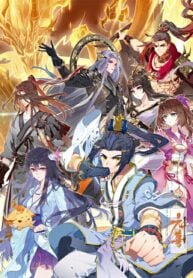
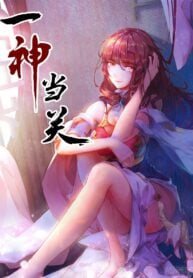
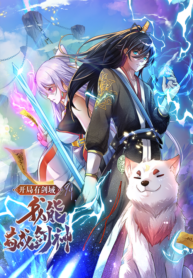
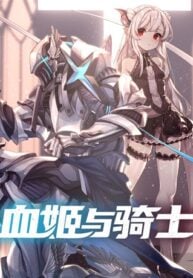
Manhua — (Chinese) Comics in the Chinese tradition. Modern manhua is dominated by digital, full-color, vertical-scroll formats.
Manhwa — (Korean) Comics in the Korean tradition. Includes both traditional print manhwa and the dominant modern webtoon format.
Mangaka — (Japanese) The author of a manga; can be one person or a team headed by one named figure.
Manhuajia — (Chinese) The author of a manhua. Functionally equivalent to mangaka.
Mecha — A genre featuring large piloted robots or mechanical suits. Originated in 1960s–70s Japanese animation and quickly spread to manga.
Murim — (Korean) The “martial-arts world” of Korean wuxia-equivalent fiction. A major engine of contemporary Korean webtoons.
N
Nekketsu — (Japanese, “hot blood”) A trope (and tonal mode) emphasizing passionate, often shōnen-coded determination. The “never give up” mode of much classic Shōnen Jump.
O
One-shot — A self-contained, single-chapter manga. Sometimes a finished short story, sometimes a pilot for a future series.
OVA — “Original Video Animation”; an anime released directly to home video rather than broadcast or theatrical release.
R
Raw — A scan of an original-language manga before translation. Used (often loosely) by readers seeking the untranslated source.
Regression — A genre, particularly common in Korean webtoons, in which a protagonist returns to their past with knowledge of future events. Often combined with revenge or do-over narratives.
S
Scan — A digital scan of a printed manga page. The term carries different connotations depending on whether the scan is officially sourced (e.g., publisher proofs) or unauthorized (see our Anti-Piracy Statement).
Seinen — (Japanese) Manga marketed primarily to adult men. Often visually and thematically more mature than shōnen.
Shōjo — (Japanese) Manga marketed primarily to teenage girls. Frequently associated with romance and emotional drama, though the demographic encompasses many genres.
Shōnen — (Japanese) Manga marketed primarily to teenage boys. The most commercially dominant demographic in modern manga; commonly action-driven.
Shōnen-ai — A genre of male-male romance with a softer, less sexually explicit tone than yaoi. Sometimes used interchangeably with BL in English, though Japanese usage distinguishes them.
Sub — A version of an animated work with the original voice acting preserved and translated subtitles added. Contrasted with dub.
T
Tankōbon — (Japanese) The standard collected volume of a manga series. Roughly the size of a paperback, typically 180–220 pages.
V
Volume — A bound collection of manga chapters. In Japanese practice, equivalent to a tankōbon.
W
Webtoon — A digital, vertical-scroll comic format originating in Korea. Designed for smartphone reading, typically full color, with each “episode” a single continuous scroll.
Wuxia — (Chinese, “martial heroes”) A genre of martial-arts adventure, typically set in pre-modern China, emphasizing chivalric codes and conflict among martial sects.
X
Xianxia — (Chinese, “immortal heroes”) A genre of fantasy combining martial arts with cultivation, Daoist cosmology, and supernatural elements. The Chinese equivalent (and ancestor) of much modern manhua fantasy.
Y
Yaoi — (Japanese) Male-male romance with explicit content. The Japanese term for what is often loosely called BL in English.
Yuri — (Japanese, “lily”) Female-female romance, in any range of explicitness.
Notes on usage
Many of the above terms have evolved as their respective traditions have globalized. “Isekai,” for instance, was once a niche subgenre of Japanese light novels; it is now the dominant marketing category across multiple languages and media. “BL” has similarly broadened from a Japanese-specific term to a global one.
We try to use the most current and most commonly understood meaning in our editorial coverage, and we link back to this glossary on first use of a non-obvious term within an article.
Related pages: Reader’s Guide · About Us · Methodology · Sources & Citations · FAQ

